
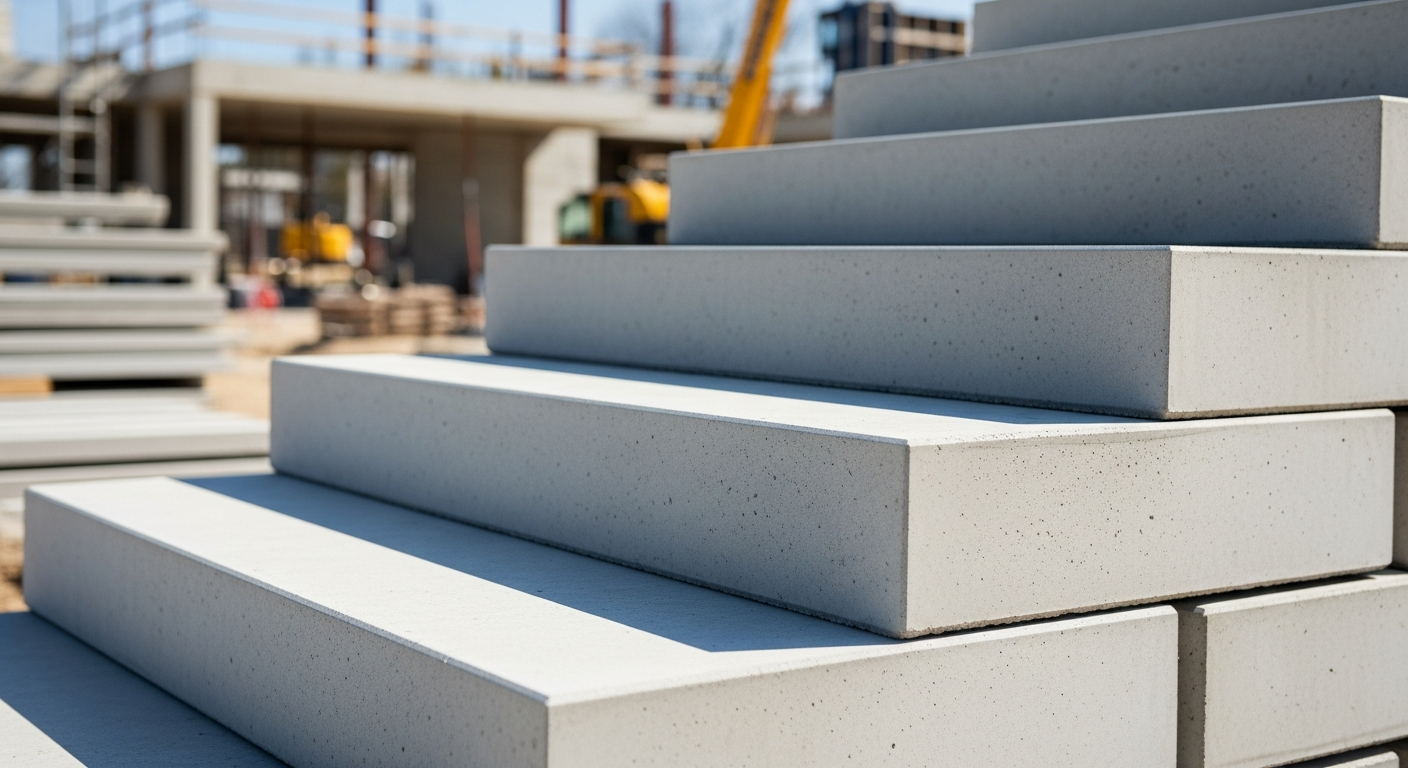
Transitioning from Traditional Methods to Modern Solutions
In the modern construction industry, speed and cost management are the two most critical factors determining project success. Building stairs in residential projects using traditional cast-in-place methods can be a laborious and time-consuming process. However, the use of precast ready-made stair steps in housing projects offers a revolutionary solution that lightens this operational burden.
Precast Solutions Shortening Construction Time
Since precast elements are manufactured in a factory environment, they are prepared independently of weather conditions at the construction site. This provides significant time savings in the critical path of the project.
Fast Assembly and Labor Savings
While traditional stairs require days of waiting for formwork, reinforcement, and concrete curing, ready-made steps are ready for installation as soon as they arrive at the site. This can accelerate structural construction time by up to 30%. Reducing the need for manual labor also simplifies site management.
Cost Advantage: Precast Ready Step Prices and Profitability
Although the product cost may seem high at first glance, precast stair step prices act as a serious savings tool when evaluated within the total project budget. The elimination of formwork costs, minimization of waste, and reduction in labor expenses lower the unit cost.
Eliminating Error Margins
Steps produced with millimeter precision in a factory environment prevent errors that may occur during assembly. This contributes to budget discipline by eliminating the costs of subsequent corrections and repairs.
Conclusion: Precast as a Strategic Investment
Using precast ready-made stair steps in housing projects is not just a technical choice, but also a strategic cost management move. For contractors and developers who want to optimize construction time and proceed with a predictable budget, precast solutions stand out as the most efficient alternative. You can increase efficiency in your projects by examining professional assembly details and switching to precast systems.