
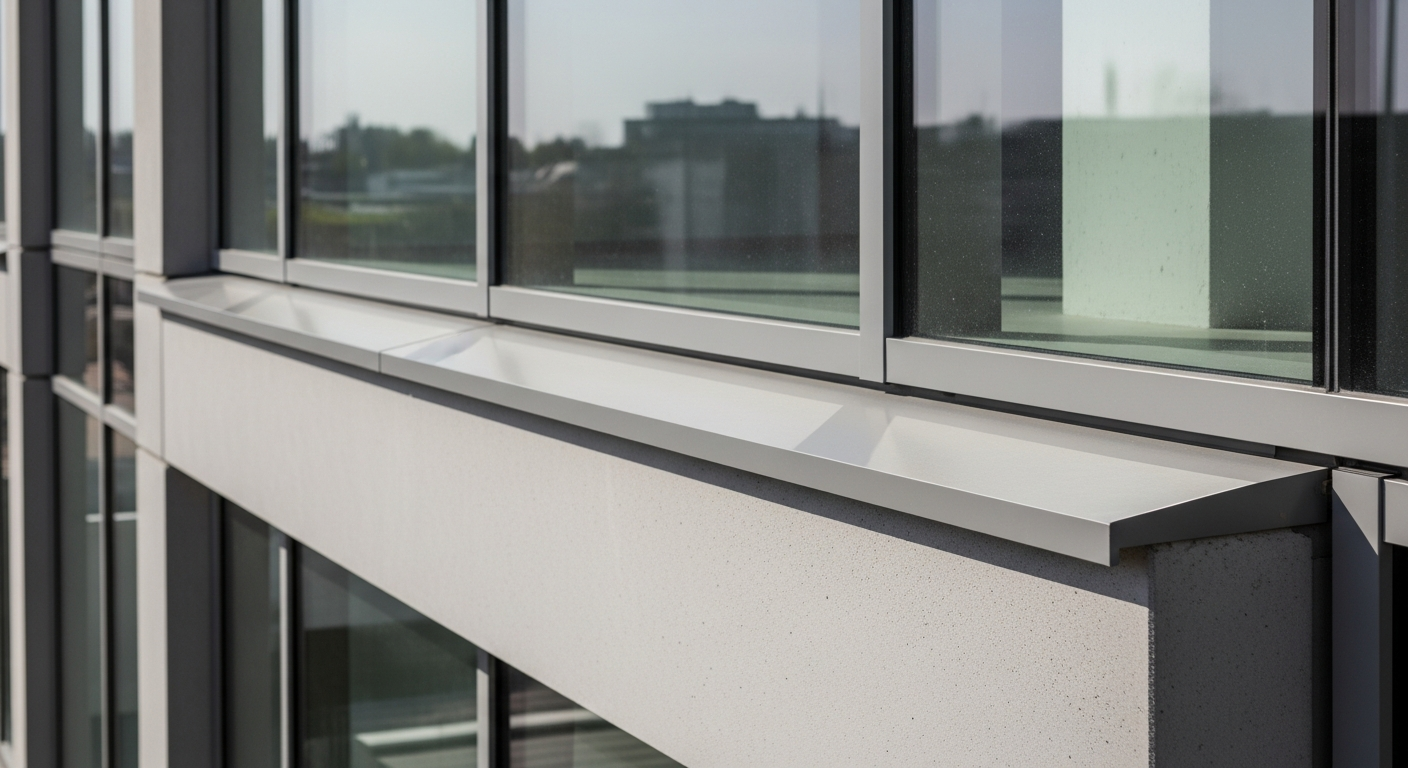
Modern architectural trends emphasize maximizing natural light and providing panoramic views through the use of expansive glass surfaces. However, this aesthetic preference brings a significant technical challenge: thermal bridges. Heat losses occurring at the base of window frames and parapet joints can reduce energy efficiency and lead to structural issues like condensation.
The Thermal Bridge Challenge in Large Glass Surfaces
The intersection points where large glass surfaces meet the building structure are the weakest links thermally. Traditional marble or stone sills, due to their high thermal conductivity, directly transfer cold from the outside to the interior, creating a thermal bridge. In modern architecture, the most effective way to overcome this is through insulated precast window sill and parapet solutions with low thermal conductivity coefficients.
Why Traditional Sills Fall Short
Traditional materials struggle to meet modern insulation standards. Particularly in large openings, the material's expansion coefficient and installation details can trigger sealing problems. Precast solutions are manufactured with factory precision, minimizing margins of error during installation and ensuring thermal barrier integrity.
Technical Advantages of Insulated Precast Window Sills
Precast sill systems offer both structural durability and superior insulation performance thanks to their composite structure. Produced with lightweight concrete technology and internal insulation materials, these elements directly contribute to a building's energy performance rating.
- Low Thermal Conductivity: Increases interior comfort by providing thermal breaks.
- High Durability: Resistant to outdoor weather conditions and UV rays.
- Rapid Installation: Custom-sized parts save time on the construction site.
Precast Technology and Aesthetics in Parapet Solutions
Parapets are not just safety elements; they are aesthetic details that define a building's silhouette. Precast parapet solutions offer a smooth and seamless appearance at the bottom finishes of large glass facades. Hidden drainage details and special finishing elements preserve the integrity of the facade.
Energy Efficiency and Sustainability
Building standards in 2026 mandate solutions aimed at reducing the carbon footprint. Insulated precast elements lower the building's operational energy costs by reducing heating and cooling loads. This is a strategic choice for architects and contractors for a sustainable future.
Conclusion
It is possible to achieve energy efficiency without compromising the aesthetics offered by large glass surfaces in modern architecture. Insulated precast window sill and parapet solutions are the most rational approach combining technical performance with design. Choose engineering-focused precast solutions to eliminate thermal bridge risks and create long-lasting details in your projects.