
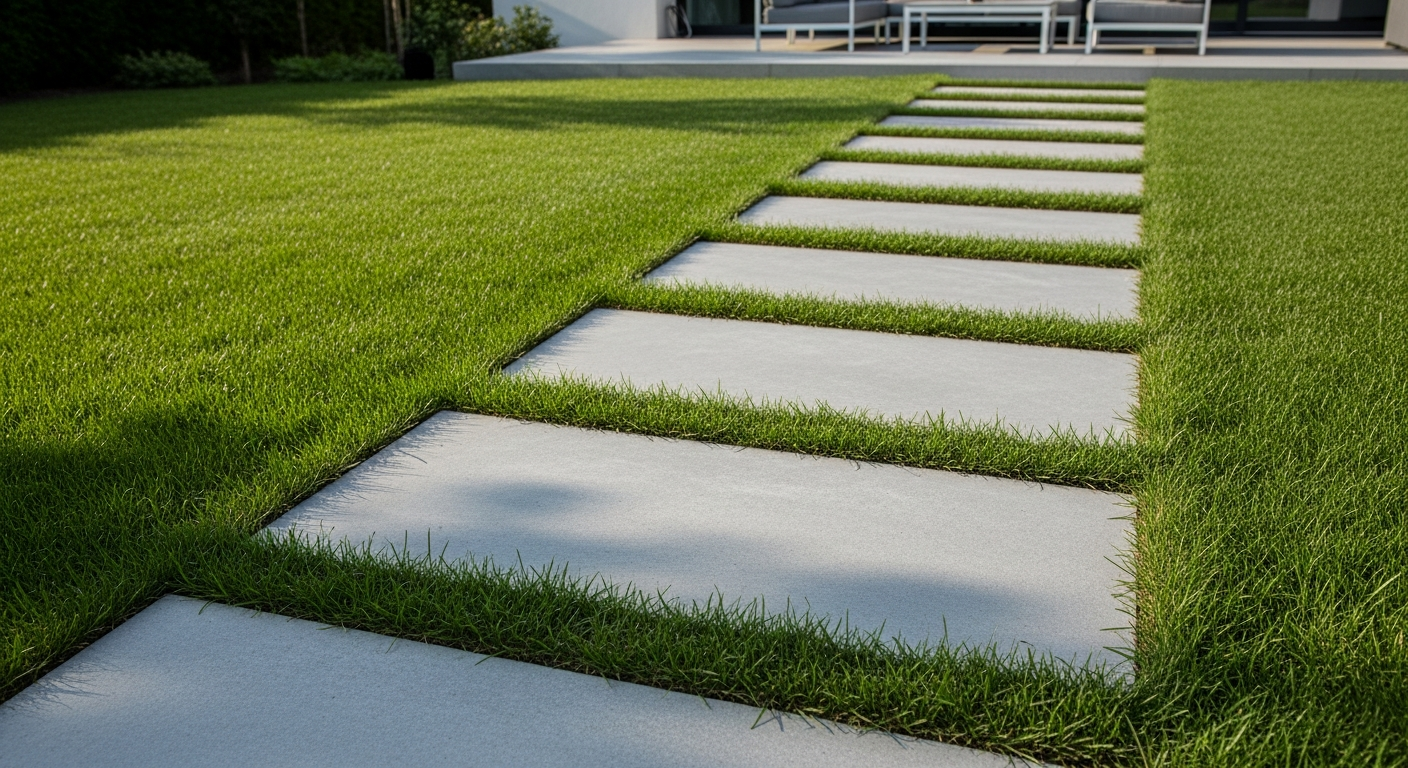
Functional Aesthetics in Gardens: Precast Stepping Stones
In garden landscaping, precast stepping stones are one of the most effective solutions for providing visual integrity and protecting lawn areas. Correct placement not only creates a stylish walkway but also supports the drainage structure and overall layout of your garden. In this guide, we will examine precast stepping stone placement and ground preparation techniques step by step.
Why Is Ground Preparation Important?
Ground preparation is a critical stage to ensure that stepping stones do not collapse, slide, or collect water over time. A poorly prepared ground causes the stones to become unstable and spoils the aesthetics of the landscape.
Excavation and Level Determination
The area to be applied must first be marked. It is recommended to excavate to a depth of approximately 10-15 cm in addition to the thickness of the stones. This depth is necessary for the stabilized material and sand layer to be placed underneath. The elevation level should be adjusted so that the stones remain about 1-2 cm above or exactly level with the grass.
Drainage and Filling Layer
A thin layer of gravel or stabilized material should be spread at the bottom of the excavated area to prevent water accumulation. This layer must be thoroughly compacted. The fine sand layer to be spread on top allows the stones to be perfectly leveled.
Precast Stepping Stone Placement Techniques
After the ground is prepared, the stone arrangement phase begins. At this stage, human ergonomics and aesthetic perception should be prioritized.
Adjusting Step Distance
The distance between stepping stones should be planned to be 60-65 cm (center to center), which is the average human step range. This provides a natural rhythm while walking. When placing the stones, a rubber mallet should be used to ensure they sit firmly on the ground, and their balance should be checked with a spirit level.
Tips for Long-Lasting Application
Precast concrete materials are durable, but incorrect application can shorten their lifespan. The gaps around the stones can be filled with river sand, decorative pebbles, or joint filler depending on your project. In applications within grass areas, edge restraints can be used to prevent grass roots from growing under the stones.
In conclusion, with correct ground preparation and technical placement, you can achieve a professional look in your garden and create a walkway that you can use safely for years. The attention paid to details during application will determine the total quality of your landscaping project.