
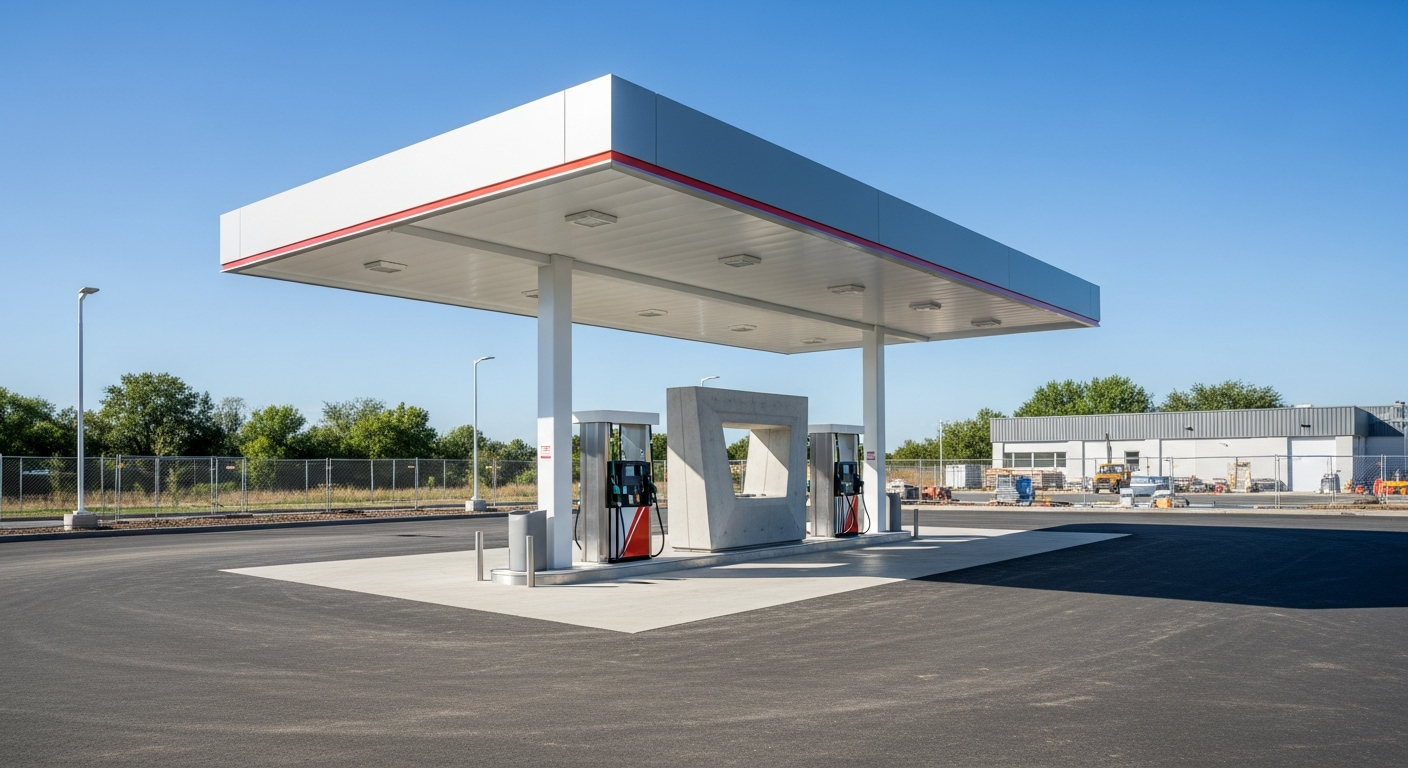
In the evolving landscape of fuel retail infrastructure, speed, safety, and longevity have become paramount. Compared to traditional cast-in-place methods, the usage of precast pump islands in gas stations offers unique operational advantages to both operators and contractors.
What is a Precast Pump Island?
A precast pump island is a ready-to-install concrete module manufactured in a controlled factory environment according to high-quality standards. These platforms, upon which fuel dispensers are positioned, protect the core filling points of the station from environmental factors and vehicle impacts.
Key Advantages of Precast Assembly
The most significant benefit of precast systems is the time savings achieved during field operations. While traditional methods involving formwork, rebar tying, and concrete pouring can take several days, precast solutions reduce this process to just a few hours.
Reduction of Site Labor and Human Error
Due to factory-controlled manufacturing, dimensional deviations are nearly non-existent. This precision prevents any incompatibility issues during the installation of pump equipment. By reducing site clutter, it allows other infrastructure works to proceed simultaneously.
Long-term Durability and Aesthetics
Gas stations are environments subject to heavy vehicle traffic and frequent chemical spills. Precast pump islands are produced using high-strength concrete classes and special protective coatings. This makes the islands resistant to corrosion, fuel spills, and abrasion. Furthermore, the smooth surface finish provides a modern and professional aesthetic to the station.
Conclusion: Choosing Precast for Efficient Station Build-outs
Utilizing precast pump islands in gas stations is more than just a construction preference; it is a strategic investment decision. With ease of assembly, low maintenance costs, and a durable structure, it ensures projects are completed on schedule and within budget. Opting for precast solutions in your technical infrastructure can maximize your operational efficiency for any modern station project.