
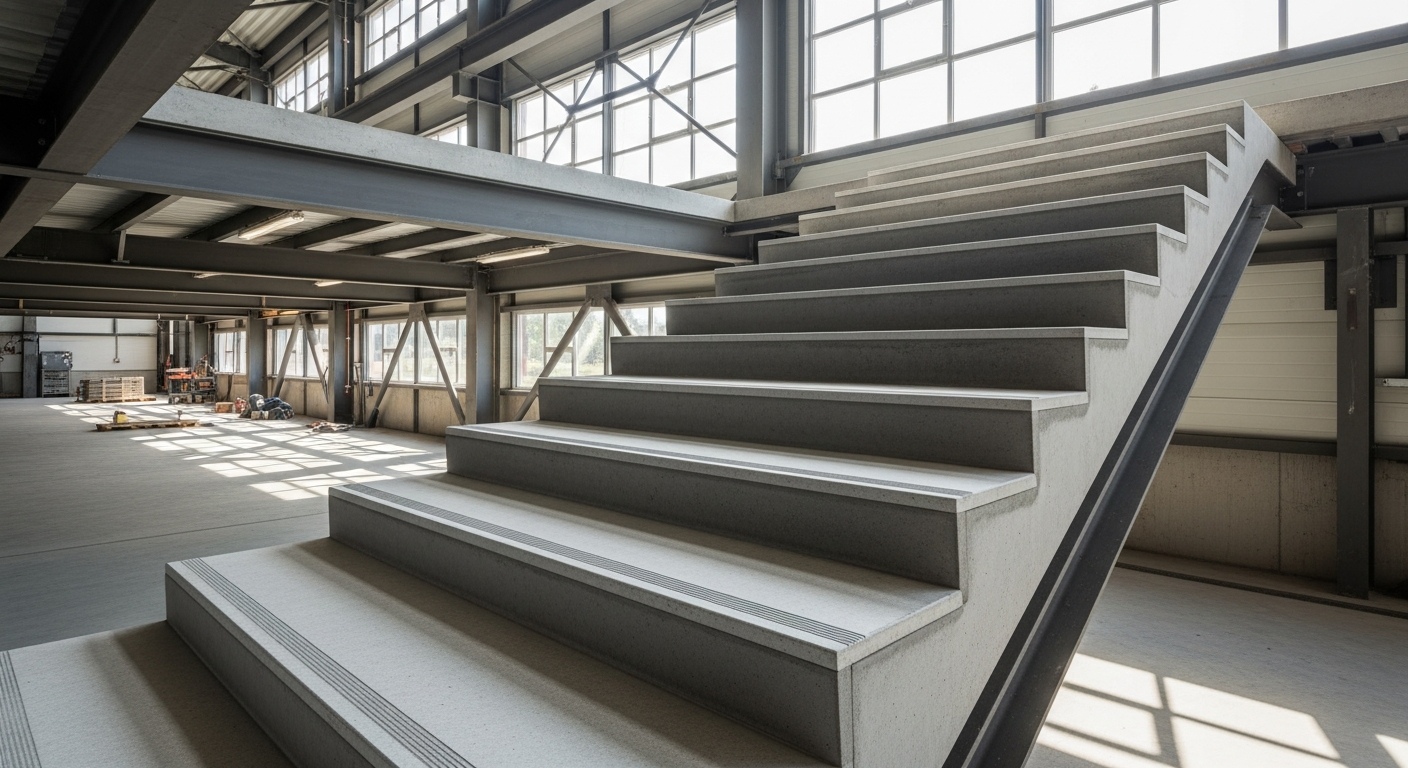
Fire-Resistant Precast Stair Tread Systems for Industrial Facilities
In industrial facilities, occupational safety and structural integrity start with emergency evacuation routes. Stairs, one of the most critical components of these routes, must demonstrate high resistance to heat, especially during fire incidents. Fire-resistant precast stair tread systems and assembly standards in industrial buildings ensure both structural longevity and guaranteed safe evacuation in case of disaster.
Technical Advantages of Fire-Rated Precast Steps
Because precast concrete is produced in a controlled factory environment, it possesses high density and rigorous quality standards. Fire-rated steps can maintain structural integrity for durations such as R60, R90, or R120 due to specialized concrete mixes and reinforcement structures. These systems offer smoother surfaces and millimetric precision compared to conventional cast-in-place concrete stairs.
Material Composition and Strength
Concrete classes of C40/50 and above, used in industrial-grade precast treads, are resistant to thermal shocks. Concrete cover distances for reinforcements are increased in accordance with fire regulations to prevent overheating and expansion of the steel elements.
Installation Standards and Application Details
The assembly of precast stairs is not merely placing treads; it is the integration of the system into the building's load-bearing structure. In industrial projects, it is mandatory that assembly complies with ISO standards and relevant fire codes.
- Anchoring Systems: Chemical anchors and plates used to connect steps to steel constructions or shear walls must be fire-rated.
- Joint and Gap Fillers: Gaps between treads must be filled with fire-stop sealants or non-combustible wicks.
- Tolerance Control: In industrial use, the elevation differences and planarity of the steps must remain within standard deviation limits for user safety.
Structural Integrity and Constant Inspection
Heavy load traffic and chemical effects in industrial buildings can cause stairs to wear over time. Periodic inspections should be carried out after the installation of fire-resistant systems. Specifically, monitoring corrosion at connection points directly affects the system's performance during a fire. When choosing the right tread type for your project, ensure that static calculations and fire scenarios are approved by expert engineers.
In conclusion, precast stair tread systems are an indispensable element in the safety architecture of industrial buildings. With correct engineering and installation according to standards, you can take your facility's safety to the next level. Contact our expert teams for technical support and project details.