
Critical Details in Exterior Thermal Insulation
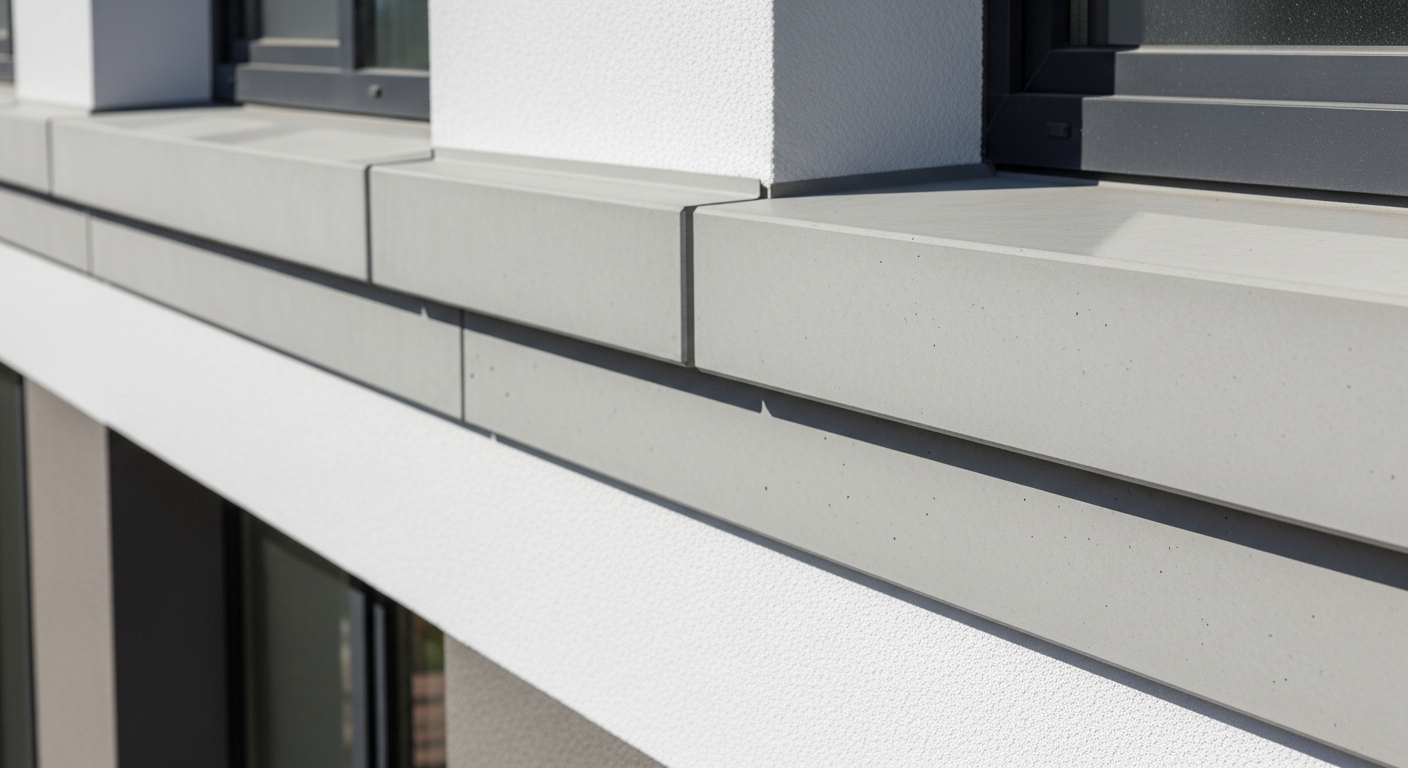
Energy efficiency in the modern construction industry is no longer a luxury but a necessity. Thermal insulation systems applied to building exteriors aim to minimize energy loss. However, using insulation boards alone is not enough. Window sills and the tops of parapet walls (copings) are areas most prone to thermal bridges. This is where the use of precast sills and copings becomes crucial.
The Role of Precast Elements in Preventing Thermal Bridges
A thermal bridge is a weak point in the building's exterior envelope where thermal resistance is reduced, and heat transfer between the outside and inside environments accelerates. Traditional marble or stone sills can carry outside cold directly into the inner layers of the wall due to their high thermal conductivity.
Technical Advantages of Precast
Precast concrete elements are high-density components produced in controlled factory environments. Precast sills and copings designed to be compatible with insulation systems do not disrupt the continuity of the insulation layer during installation. This can increase energy efficiency by up to 15% by closing thermal gaps in the building envelope.
Direct Contribution to Energy Efficiency
Using precast sills and copings in exterior insulation not only prevents heat loss but also extends the life of the structure. Thanks to designs with integrated drip grooves that optimize water drainage, water is prevented from seeping into the insulation layer. Considering that wet insulation material loses its performance, the protective role of these elements is vital for energy savings.
Why Choose Precast?
- Thermal Compatibility: The expansion coefficient is similar to other building materials, preventing cracks.
- Ease of Application: Provides fast installation and reduces labor errors.
- Aesthetics and Durability: Provides long-lasting solutions suitable for modern architectural designs.
In conclusion, in an energy-efficiency-oriented project, the choice of sills and copings should be evaluated as an engineering decision, not just an aesthetic one. Properly applied precast elements will result in a significant reduction in heating and cooling costs in the long run.